Sagging Floors and House Leveling in Older Cincinnati Houses
Sagging floors in a Cincinnati house usually come from one of two places. Most often it is the framing: a main beam, a post or a run of joists that has bent, rotted or been cut over a century. Less often the foundation itself is dropping. The first is a carpentry job; the second needs support under the footing.
Fixr (2026) puts most sagging floor repairs at $1,000–$8,500, sistering at $150–$325 a joist and a new main beam at $2,000–$10,000. Lifting a whole house is a much bigger job: $20,000–$30,000 in Fixr's 2026 foundation guide and $20,000–$23,000 from This Old House (2026).
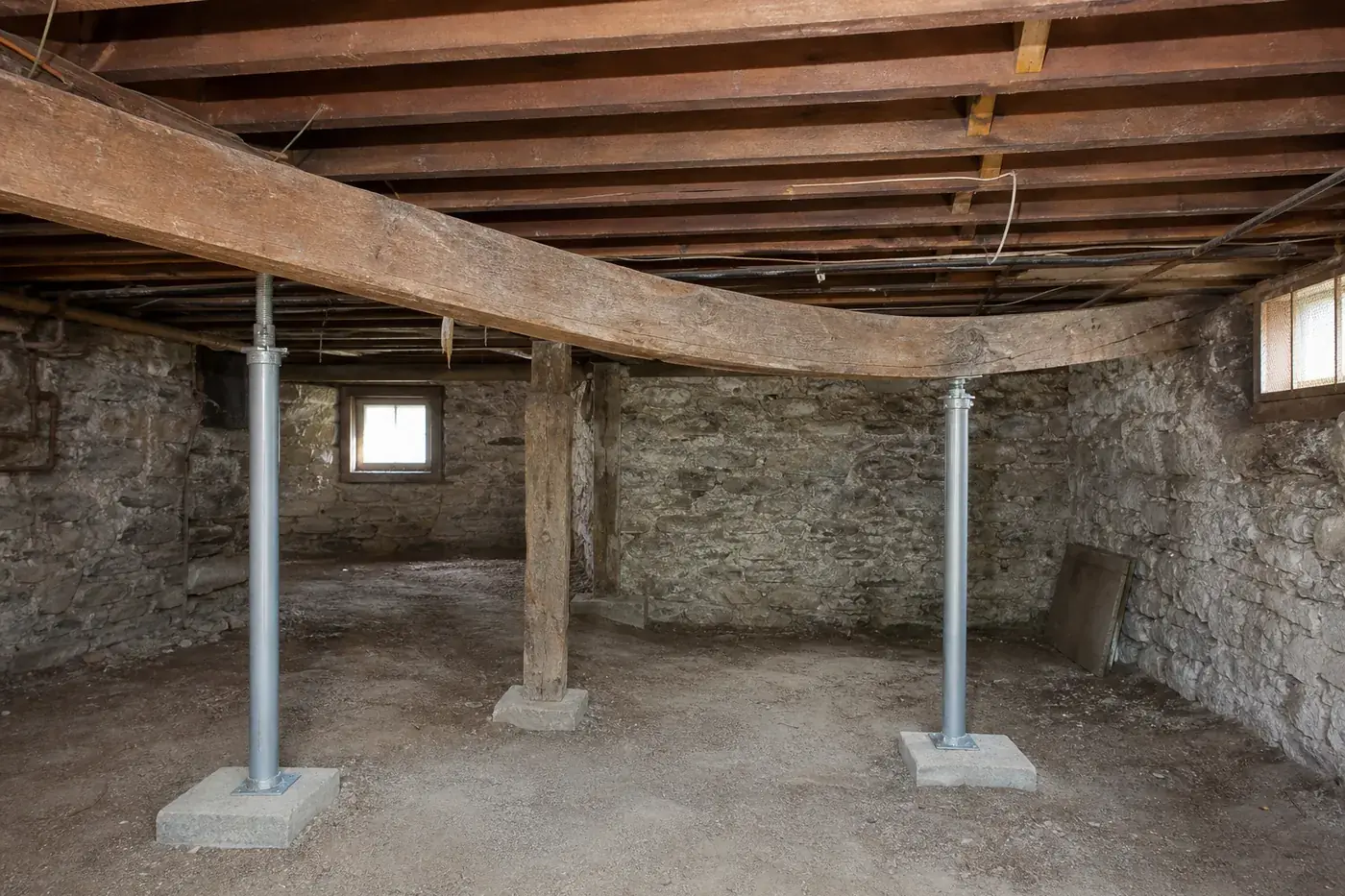
Framing or foundation: what is making the floor sag?
- A dip in the middle of a room, bouncy floors, a sag along a line: usually a beam or joists below. Look in the basement for a bowed beam, a leaning or rusted post, or joists notched for old pipes.
- The whole floor sloping toward one wall, with stair-step cracks outside on that side: the foundation at that corner may be settling or, on a hillside, moving downhill.
- Doors sticking in summer and fine in winter: often seasonal humidity, not structure.
Cincinnati's old stock makes framing the usual answer: 40.9% of the city's homes were built in 1939 or earlier (U.S. Census).
How sagging floors are fixed
- Sistering: a new joist bolted alongside a cracked or sagging one. Fixr (2026): $150–$325 a joist.
- New posts and footings: adjustable steel posts on proper footings under a beam that has too few supports.
- A new or reinforced beam: Fixr (2026): $2,000–$10,000 for a main support beam.
- Jacking slowly: raising a sagging line a little at a time, over weeks, so plaster and trim are not torn.
When house leveling means the foundation
If a corner or wall is dropping, the support goes under the footing: steel or helical piers taken down to firm ground, then the house is held or gently lifted. Fixr (2026) prices piers at $1,000–$3,000 each and full house leveling at $20,000–$30,000. On a Cincinnati hillside, find out first whether the ground is still moving; the hillside page explains why. Ohio's residential code puts exterior footings at least 12 inches below undisturbed ground and below the local frost line, which the city sets.
Old plaster, permits and expectations
A house that has sat out of level for decades rarely goes back to perfect. Lifting it fully can crack plaster, jam doors that were planed to fit and break old pipes, so many owners aim to stop the sag and lift only part of it. Beam, post and pier work is structural, and the city's permit guide requires permits for structural changes. Prices are side by side on the Cincinnati foundation repair cost page.
Questions homeowners ask
Can I put a jack post under a sagging beam myself?
It is a common stopgap, but a post needs a footing, not just the basement slab, or it will push through the floor. Raise any jack only a little at a time. Because beams and posts are structural, check with the city about a permit, and have a specialist look at why the beam sagged in the first place.
What is the house, or the hill, doing?
A crack that keeps growing, a door that started sticking, a yard or retaining wall that is leaning, water after a storm: a sentence or two is plenty. It goes to one independent foundation specialist who works in Cincinnati.