Foundation Warning Signs in a Cincinnati House, and What Each Usually Means
Foundation warning signs are easier to judge once you know what usually causes each one. Each sign below gets a short answer, how soon to act, and the page that covers the fix. On a hillside lot, read every sign with the slope in mind.
A sideways crack in a block wall usually means soil pressure; stair-step cracks near a corner, settling or slope movement; a sagging floor, tired framing more often than the foundation; water up the floor drain, a sewer backup to report to MSD within 48 hours.
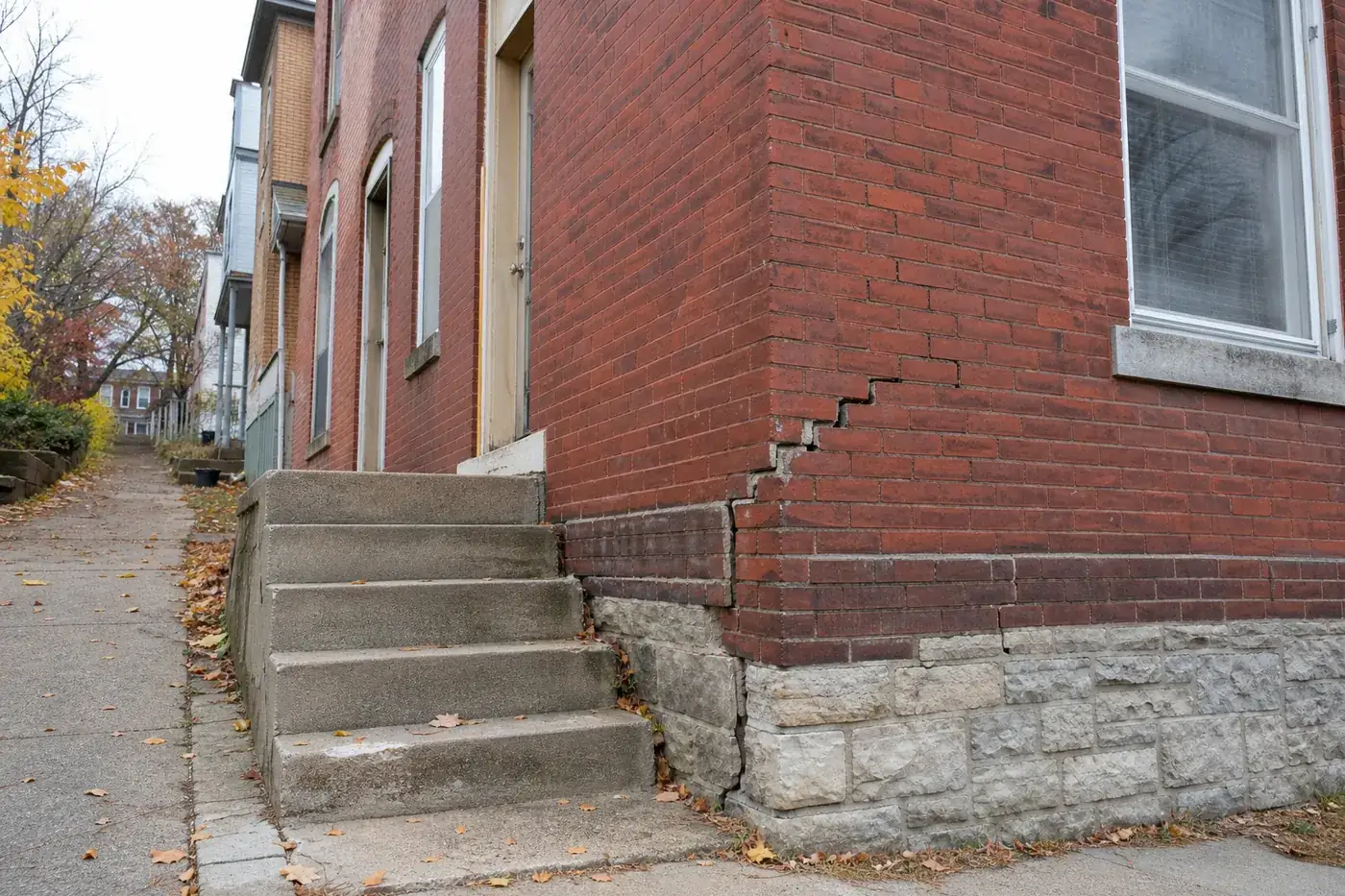
What do stair-step cracks in brick mean?
The corner below is moving down or outward. On flat ground that is usually settling, often where a downspout empties beside the house. On a slope, it can mean the ground is creeping downhill. Mark the crack ends with a date and watch through one spring. Growing cracks mean it is time for a specialist; see hillside foundation repair.
Is a horizontal crack in a basement block wall serious?
It is the one to take seriously. A crack running along a mortar joint a few courses below the top means wet soil outside is bending the wall inward. Measure how far the wall bows with a string line. If it has moved since you last checked, or blocks have shifted, see cracked and bowing walls soon.
Why are my floors sloping or bouncy?
In an older Cincinnati house, most often the framing: a bent main beam, a post that sank or rotted, or joists cut for old pipes. If the whole floor tilts toward one wall and that wall has cracks outside, the foundation corner may be dropping. Look in the basement before assuming the worst; see sagging floors and house leveling.
My doors stick. Is it the foundation?
Sometimes. Doors that stick only in humid summer months and free up in winter are usually swelling wood. Doors that suddenly bind all year, with a tapered gap above them or new cracks running from the door corners, point to movement in the frame or foundation. Note which doors and which side of the house.
My retaining wall is leaning. What does that mean?
Either the wall was undersized or undrained, or the slope behind it is pushing harder than it used to. Wet colluvium is heavy, and Fixr (2025) notes that walls over 4 feet need a structural engineer. A leaning wall above or below the house is worth a look soon, because what it holds back is the ground your house sits on.
Trees in the yard are tilting and the lawn has new steps. Should I worry?
Yes, enough to have the lot checked. The Ohio Geological Survey lists step-like scarps, hummocky ground, leaning trees or fence posts and water seeping from a slope as signs that a slope has failed. Keep downspout water off the slope and do not pile fill at the top or dig at the bottom.
Water seeps in where the wall meets the floor. What is it?
Groundwater collecting against the foundation and finding the weakest seam. In clay it drains away slowly. Check gutters, downspouts and the grade first. If it returns after every heavy rain, an interior drain and sump is the usual fix; see basement waterproofing.
Water came up the floor drain. Is that the foundation?
Almost never. Water rising from a floor drain, especially if it is dirty or smells, is a sewer backup. Report it to MSD right away; to be considered for reimbursement, a backup must be reported within 48 hours of discovery. MSD investigates and decides whether the public sewer caused it.
What is the house, or the hill, doing?
A crack that keeps growing, a door that started sticking, a yard or retaining wall that is leaning, water after a storm: a sentence or two is plenty. It goes to one independent foundation specialist who works in Cincinnati.