Hillside Rules, Permits and Hiring for Foundation Work in Cincinnati
The City of Cincinnati has more written rules about hillsides than most cities, and it registers every contractor who works inside city limits. This page sums up what the city and the State of Ohio publish, so you know what to ask before signing. Rules in Norwood, Cheviot and other separate cities in Hamilton County can differ.
All contractors working inside Cincinnati city limits must hold a current city registration, renewed annually. Earthwork on active slides, slopes steeper than 3 to 1 or in the Hillside overlay needs a geotechnical engineer (city handout, 2017). Ohio lets you cancel a contract signed at home before midnight of the third business day.
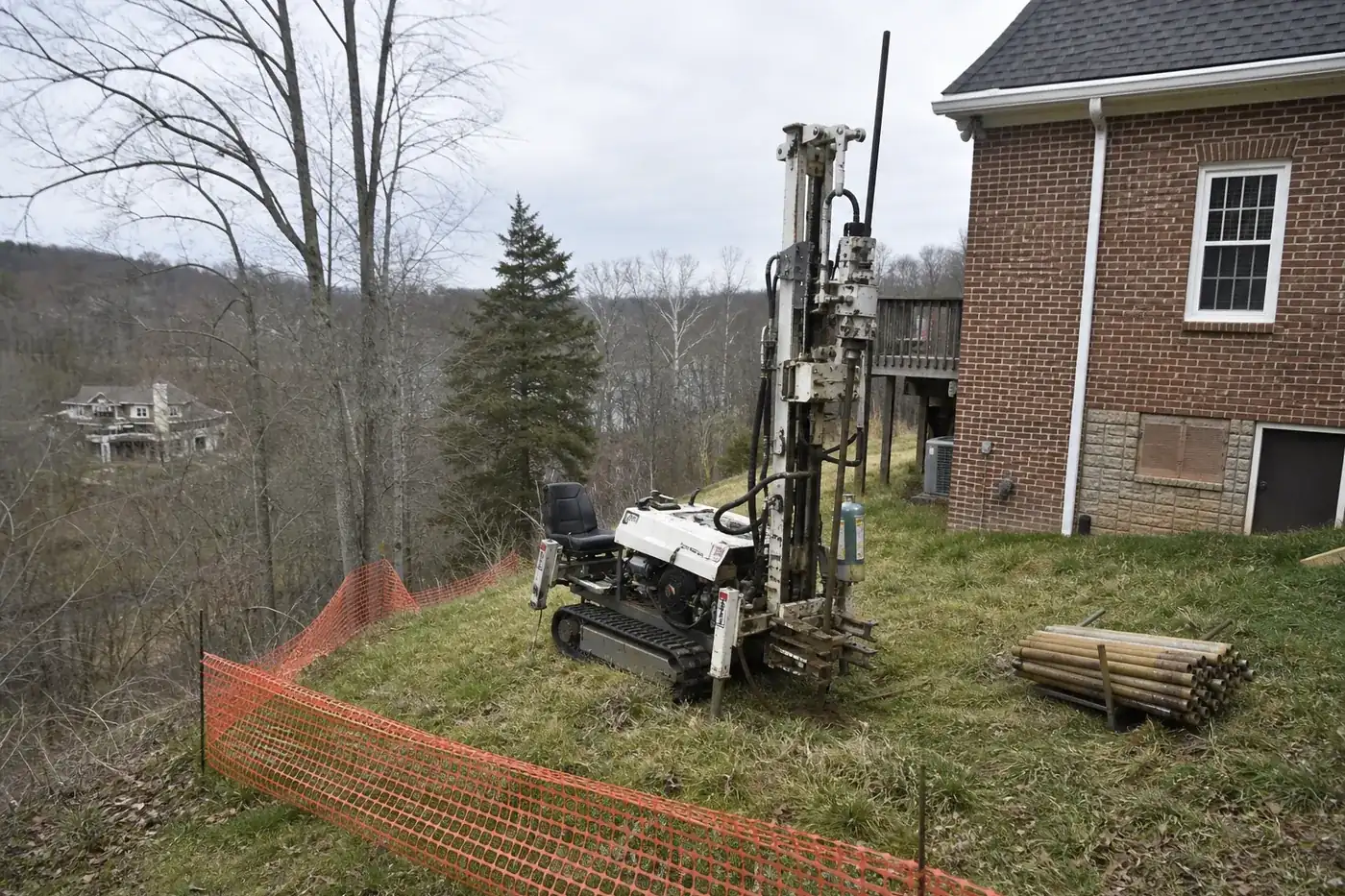
Landslide areas and the engineer requirement
The city's Buildings and Inspections handout on landslide areas (revised May 2017) defines them from susceptibility maps, a list of active landslides and field inspections. A geotechnical engineer must submit a soils report, recommend how to do the earthwork and supervise it in the field on sites with active slides, slopes steeper than 3 to 1, excavations deeper than 12 feet or next to a structure that could be undermined, structural fill over 5 feet, earthwork over 2 acres, and projects in the Hillside overlay. For one- to three-family homes, a declaration contract for those engineering services is part of the paperwork.
The Hillside Initiative
In 2025 the Department of Buildings and Inspections, the Department of City Planning and Engagement and The Hillside Trust began reviewing the city's hillside codes: overlay maps, engineering standards and construction management. The city expected recommendations to roll out from fall 2025 onward, and the review covers the City of Cincinnati only. Rules may have changed since the 2017 handout, so ask your engineer or the plan examination desk what applies now.
Which work needs a permit?
The city's residential permit guide says permits are required for new construction, major repairs, alterations and additions, including structural changes. Retaining walls, excavation and filling land need separate permits, and plumbing permits cover storm drainage and sewers on private property. Gutters and downspouts on one- to three-family homes are exempt. Work done without a required permit carries an investigation fee. The city advises making sure the contractor is named on the permit before work begins.
Checking the contractor and the contract
Ohio's construction licensing board covers electrical, plumbing, HVAC, hydronic and refrigeration contractors, not foundation or waterproofing work. Cincinnati instead registers contractors, with a home improvement category for repair work on one- to three-family homes, and offers a search for registered contractors. The city's advice: get three estimates, ask for the registration number and expiration date, insist on a written contract with the scope, dates, total price and warranties, never pay the bulk up front, and, where permits were required, get the city's certificate of completion before final payment. Under Ohio law (ORC 1345.23), a contract sold at your home must tell you that you may cancel before midnight of the third business day. Prices to compare are on the Cincinnati foundation repair cost page.
Sources
What is the house, or the hill, doing?
A crack that keeps growing, a door that started sticking, a yard or retaining wall that is leaning, water after a storm: a sentence or two is plenty. It goes to one independent foundation specialist who works in Cincinnati.